Optimizing Physicochemical Properties Through Bioisosteric Replacement
Our group conducts fundamental studies in bioisosteric design aimed at optimizing the physicochemical and pharmacokinetic properties of drug-like molecules. Through systematic evaluation of matched molecular pairs, we investigate how strategic structural replacements—such as fluorinated alcohols and phenols as carboxylic acid surrogates—influence key parameters including acidity, lipophilicity, and membrane permeability.
These foundational insights are then applied to address practical limitations of existing compounds, as demonstrated by our development of deuterated cystamine derivatives. These analogs retain the beneficial anti-inflammatory and anti-fibrotic activities of the parent molecule while markedly reducing the formation of noxious volatile metabolites responsible for halitosis and body odor in the context of metabolic liver disease.
Key Approaches
- →Matched molecular pair analysis for property optimization
- →Evaluation of fluorinated bioisosteres as carboxylic acid replacements
- →Systematic profiling of physicochemical properties (pKa, logD, permeability, solubility)
- →Application of insights to reduce unwanted side effects in drug candidates
Fluorinated Carboxylic Acid Bioisosteres
Our laboratory maintains a strong interest in fundamental aspects of medicinal chemistry, particularly the design of carboxylic acid bioisosteres. This line of research was initiated by Prof. Carlo Ballatore and focuses on identifying fluorine-containing motifs that can effectively replace the carboxylic acid functional group while modulating key physicochemical properties such as acidity (pKa), lipophilicity, and membrane permeability.
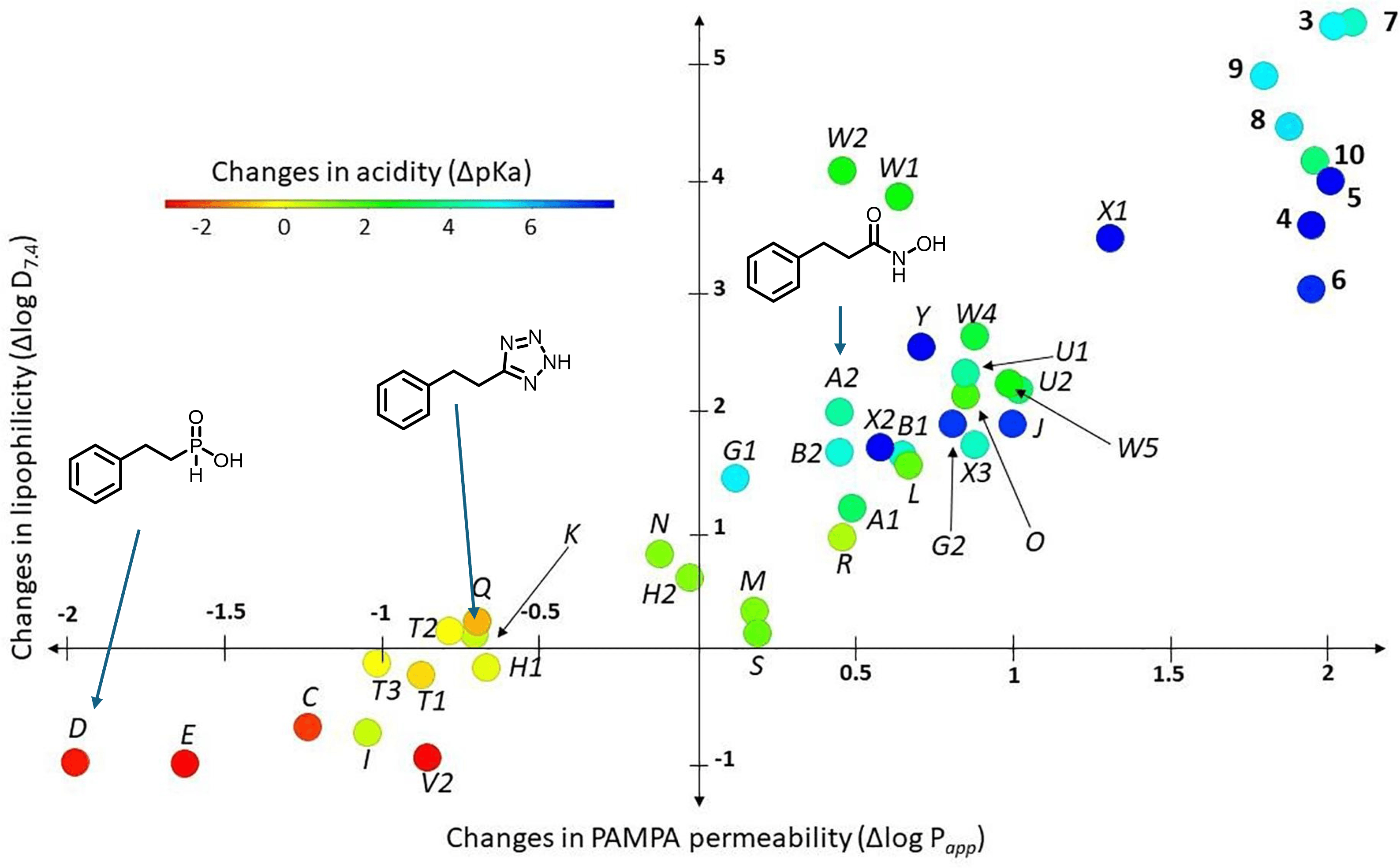
In our 2023 Bioorganic & Medicinal Chemistry Letters study, we systematically evaluated a series of fluorinated alcohols and phenols as carboxylic acid surrogates using matched molecular pair analysis. This work provided clear structure–property relationships that help guide the rational selection of bioisosteres during lead optimization (see Figure 1). These studies build on foundational contributions to the field, including comprehensive analyses of carboxylic acid (bio)isosteres in drug design and structure–property relationships of carboxylic acid isosteres.
Figure 1. Design of new fluorinated carboxylic acid bioisosteres and Structure-property relationship study (acidity, lipophilicity, permeability)
Deuterated Cystamine Derivatives for Liver Disease
Building on our expertise in property-driven compound design, we have also explored deuterium incorporation as a strategy to improve the metabolic stability and therapeutic profile of known bioactive molecules. In a recent study published in ACS Pharmacology & Translational Science (2025), we designed and evaluated deuterated cystamine derivatives with the initial goal of reducing the formation of noxious volatile sulfur metabolites responsible for the halitosis and body odor side effects associated with cysteamine.
Unexpectedly, the deuterated analog d₄-cystamine not only improved metabolic stability but also demonstrated significantly enhanced anti-inflammatory and anti-fibrotic activity in a murine model of metabolic dysfunction-associated steatohepatitis (MASH). These findings suggest that strategic deuteration can unlock improved pharmacological properties beyond simple metabolic protection and support further development of this chemotype for liver diseases (see Figure 2).
Figure 2. Deuterium dependent reduction of biomarkers of liver inflammation and fibrosis